
THE CO-OP FILES
From Co-ops. For Co-ops.
File #001
What Keeps Cooperative Managers Awake at Night?
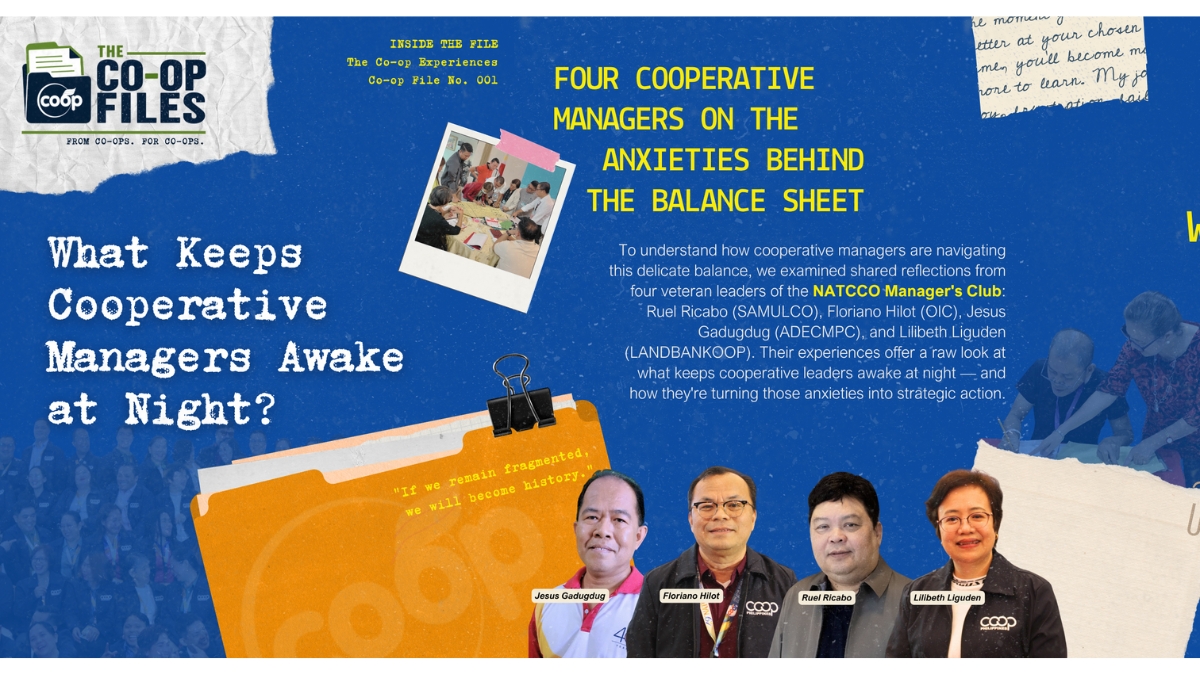
“If we remain fragmented, we will become history.”
These words from Ruel S. Ricabo, the veteran CEO of Sta. Ana Multipurpose Cooperative (SAMULCO), are not meant to alarm, but to align. Having spent 34 years steering one of the country’s prominent cooperatives, Ricabo understands that the unique, compounding pressures facing cooperative managers have reached an inflection point. It is a particular kind of weight that corporate executives rarely have to carry. While a standard corporate manager answers to a board focused primarily on maximizing shareholder returns, cooperative leaders carry a double mandate: they must maintain strict financial viability while fulfilling a deep social, member-centric mission, every single day.
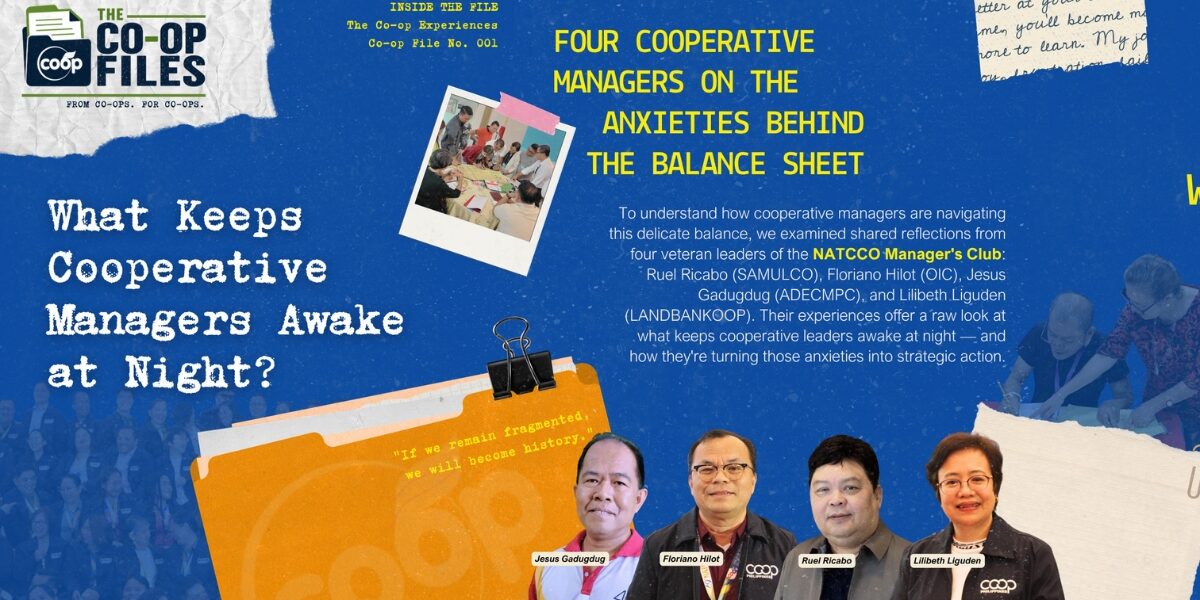
To understand how cooperative managers are navigating this delicate balance, we examined the shared reflections of four veteran leaders from the NATCCO Manager’s Club: Ricabo, Floriano Hilot of Oro Integrated Cooperative (OIC), Jesus D. Gadugdug of Alliance of Dedicated and Empowered Community Multipurpose Cooperative (ADECMPC), and Lilibeth Q. Liguden of Landbankers’ Multi-Purpose Cooperative (LANDBANKOOP). Their experiences offer a raw, unvarnished look at what keeps cooperative leaders awake at night and how they are transforming these anxieties into strategic action.
INSIDE THE FILE: The Co-op Experiences
The Portfolio Battle
In the cooperative world, financial metrics are never just numbers on a spreadsheet; they are direct measures of community trust. For Lilibeth Liguden, who has managed LANDBANKOOP for 11 years, the most immediate threat to a cooperative’s peace of mind is Portfolio at Risk (PAR). High delinquency is not simply an accounting headache, it is a threat to the institution’s very survival. As Liguden explains, minimizing PAR is a fundamental necessity because it directly protects member savings, ensures institutional stability, and maintains the operational liquidity required to keep the cooperative functioning. When capital is eroded by delinquent loans, the trust and confidence that members have placed in the cooperative can vanish overnight.
Jesus Gadugdug, General Manager of ADECMPC, views this portfolio battle as a critical systemic risk. When payments stop coming in, the damage does not remain confined to a single line item. The consequences ripple outward, draining the cooperative’s liquidity and directly limiting its capacity to provide credit to other members who may be facing urgent financial needs.
This reality underscores the difficult paradox at the heart of cooperative management. As Gadugdug notes, managers must constantly recalibrate a highly sensitive balance: providing affordable, meaningful services to members while generating enough income to sustain operations, fund new growth opportunities, and protect the cooperative’s overall financial position. It is a dynamic with no permanent equilibrium, demanding constant, active management. Ruel Ricabo is characteristically direct on this point—cooperatives are built on social principles, but principle alone cannot keep the lights on. Income is the non-negotiable fuel that drives operations, enables growth, and funds the benefits owed to both members and employees.
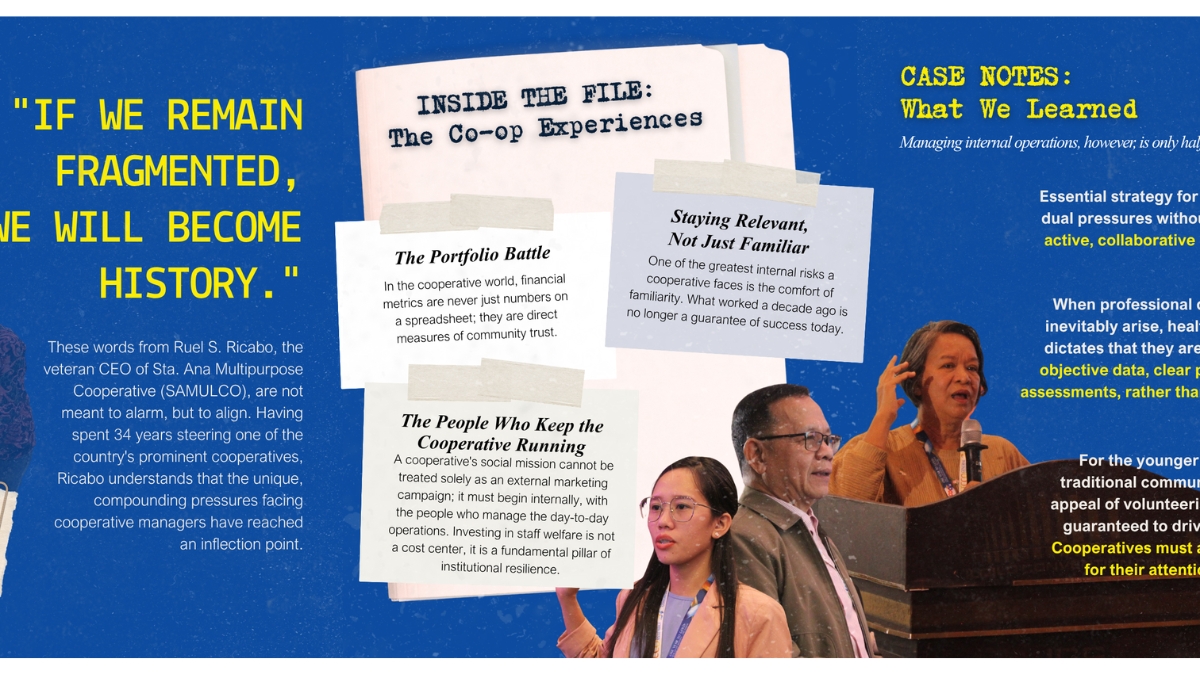
Staying Relevant, Not Just Familiar
One of the greatest internal risks a cooperative faces is the comfort of familiarity. What worked a decade ago is no longer a guarantee of success today. Liguden warns that when cooperatives rely on products built on outdated assumptions, they quietly go stale, causing members to drift away. To break this cycle, LANDBANKOOP launched an innovative Green Savings Deposit and a Green Loan program in May 2026, which quickly captured member interest. Crucially, the cooperative backed these launches with digital member surveys designed to systematically map out what members actually want and need next, rather than relying on managerial guesswork.
At ADECMPC, Gadugdug’s team has made a similar shift, anchoring their decision-making in empirical evidence rather than legacy habits. By moving away from operational assumptions and leaning heavily on actual member data and feedback, the leadership has been able to design products and services that members are genuinely willing to patronize.
For Floriano Hilot at Oro Integrated Cooperative, breaking free from the legacy trap required a structural intervention. Facing challenges in day-to-day operations, his team institutionalized an internal diagnostic process and brought in external consultancy services, giving the cooperative an outside, objective read on where it stood before deciding what to fix. Sometimes the clearer path is to bring in a second set of eyes, whether that’s a consultant, a trainer, or a peer from another cooperative who has already been through it.
The People Who Keep the Cooperative Running
A cooperative’s social mission cannot be treated solely as an external marketing campaign; it must begin internally, with the people who manage the day-to-day operations. Liguden presents a compelling case for why competitive employee compensation and benefits should be treated as a core business strategy rather than an administrative expense.
When a cooperative prioritizes the well-being of its workforce, the investment yields significant dividends across the entire organization. Fairly compensated employees take deeper, more proactive ownership of their roles, which translates directly to higher operational standards. Moreover, a robust benefits package stabilizes the workforce, preventing the talent migration that often drains a cooperative of its institutional memory. Perhaps most importantly, treating staff equitably demonstrates that the cooperative genuinely practices what it preaches, building authentic trust from the inside out. When employees feel secure and motivated, that internal health naturally radiates outward, manifesting as warmer, more attentive service that members can immediately feel in their daily interactions. Ultimately, investing in staff welfare is not a cost center, it is a fundamental pillar of institutional resilience.
CASE NOTES: What We Learned
Managing internal operations, however, is only half the battle. Cooperative leaders must also navigate complex governance structures while preparing for a rapidly shifting external landscape.
Hilot highlights an essential strategy for managing these dual pressures without burning out—active, collaborative co-governance. Rather than attempting to carry the immense weight of operational crises alone, Hilot advocates for facing challenges in lockstep with the Board Chairperson. This partnership lightens the heavy administrative load and fosters a unified leadership front. At OIC, this collaborative spirit has been extended to the staff through regular kumustahan sessions, a human-centric check-ins that keep a pulse on organizational culture before operational friction turns into a full-blown crisis.
However, this collaborative relationship requires disciplined boundaries. Gadugdug emphasizes that while the Board is responsible for setting the cooperative’s policy frameworks and strategic direction, management must be empowered to execute daily operations. When professional disagreements inevitably arise, healthy governance dictates that they are resolved using objective data, clear policies, and risk assessments, rather than personal politics. The cost of failing to maintain this discipline is high; as Ricabo warns, a disunited Board and management paralyzes decision-making, producing compromised results designed to please individuals rather than solve systemic problems.
This unified leadership is especially critical when looking at the horizon. Cooperative managers are staring down aggressive competition from agile fintech platforms, digital lenders, and traditional commercial banks that can deploy highly personalized, rapid-response services. At the same time, a profound demographic shift is underway. For the younger generations, traditional community ties and the appeal of volunteerism are no longer guaranteed to drive membership. Cooperatives must actively compete for their attention and trust.
Ricabo’s long-term outlook is a sobering wake-up call for the entire movement. He warns that if cooperatives remain fragmented and isolated over the next two decades, the business model itself faces extinction. To survive a rapidly evolving technological, cultural, and regulatory environment, individual cooperatives must embrace integration, consolidation, and strategic union. Without this collective evolution, many primary cooperatives risk becoming history.
Network Solidarity: The Power of the Federation
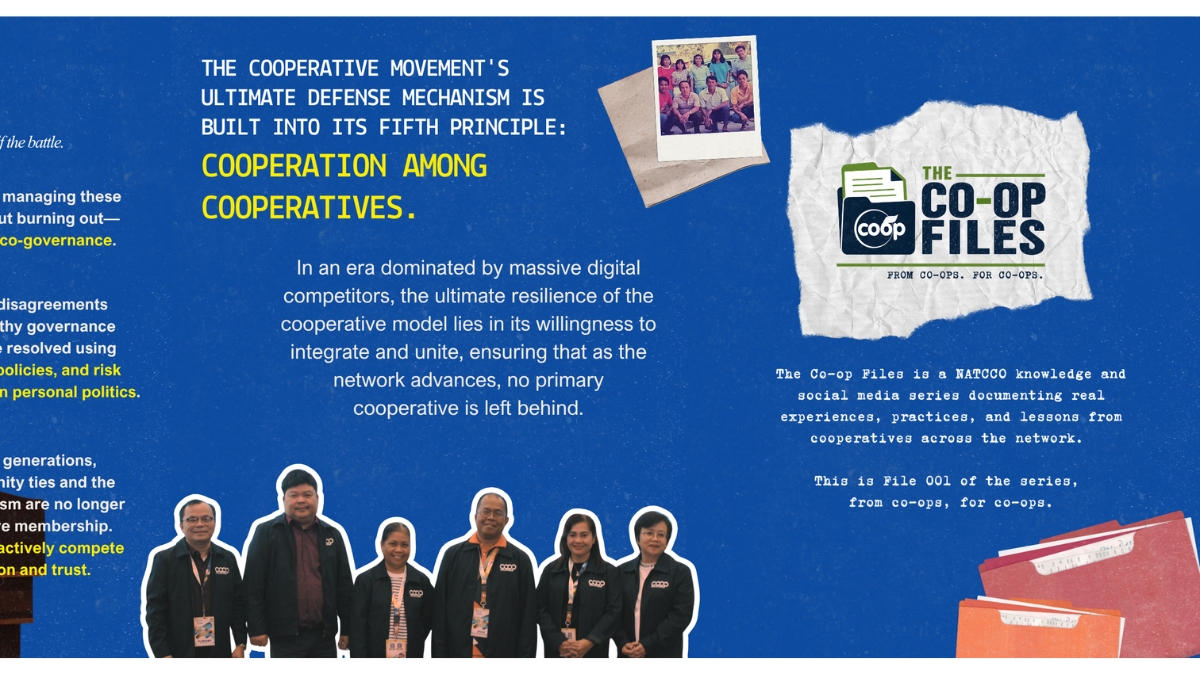
In the face of these structural, technological, and generational shifts, primary cooperatives are not required to stand as isolated islands. The cooperative movement’s ultimate defense mechanism is built into its fifth principle: Cooperation Among Cooperatives. This principle is realized when primary cooperatives actively lean into their federations.
As Liguden observes, trusting the federation to bring responsive, timely, and high-quality support is vital for long-term survival. While federation-level support is not a magic cure-all for every operational headache, it serves as the essential backbone that enables primaries of all sizes to grow, innovate, and sustain themselves.
Through active engagement with federations and collaborative spaces like the NATCCO Manager’s Club, cooperative leaders gain access to shared technological platforms, professional training, risk-management frameworks, and a vital peer-to-peer exchange. When managers can share tested solutions rather than reinventing the wheel in isolation, the entire network grows stronger. In an era dominated by massive digital competitors, the ultimate resilience of the cooperative model lies in its willingness to integrate and unite, ensuring that as the network advances, no primary cooperative is left behind.
The Co-op Files is a NATCCO knowledge and social media series documenting real experiences, practices, and lessons from cooperatives across the network. This is File 001 of the series, from co-ops, for co-ops.