Builders of Trust: How Cooperatives Build a Peaceful World Through Inclusion and Solidarity
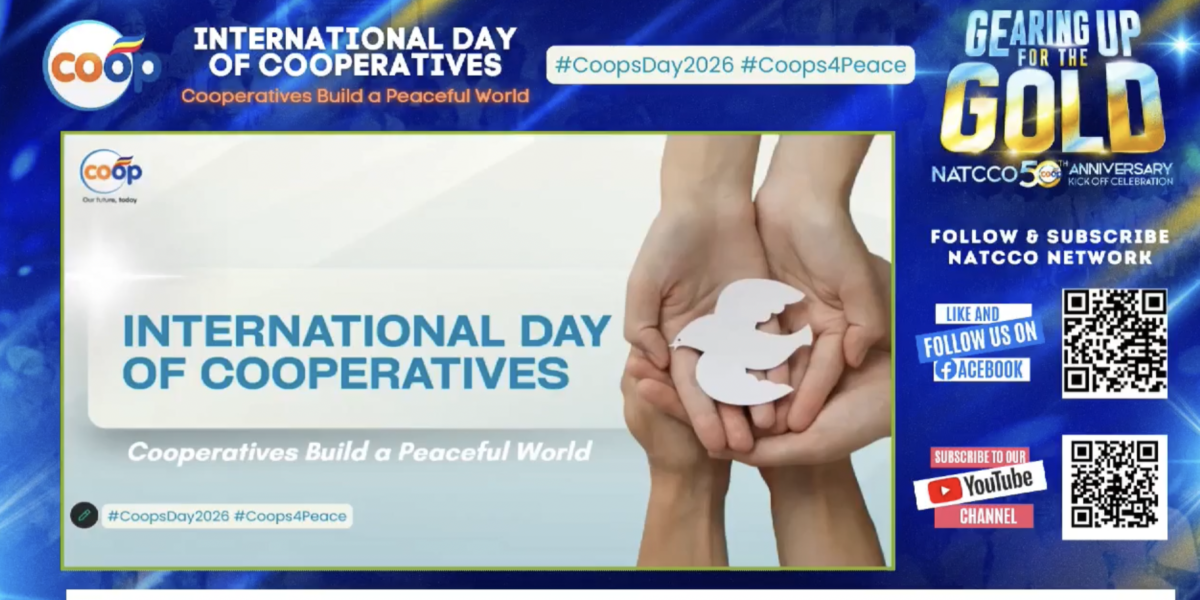
In celebration of the International Day of Cooperatives, NATCCO organized an Online Forum on July 4, 2026, from 9:00 AM to 12:00 PM, dedicated to honoring the cooperative movement’s local and global impact in building peaceful communities. The forum was joined by 418 cooperators representing 151 cooperatives.The forum was also streamed live through NATCCO’s Facebook Page.
For 2026, co-ops gathered under a powerful theme, “Cooperatives Build a Peaceful World,” to explore how their shared values could address some of the community’s most pressing challenges. In an era marked by rising inequalities, social fragmentation, and declining societal trust, the cooperative model offered a tangible blueprint for what experts called “Positive Peace.” As Jeroen Douglas, the International Cooperative Alliance (ICA) Director General, emphasized, peace is not merely the absence of war or conflict. True, lasting peace requires the presence of justice, structural inclusion, economic security, and mutual trust. Cooperatives are uniquely built to deliver exactly that because they are democratic, people-centered, and locally rooted.
NATCCO invited distinguished speakers who explored the vital link between peace and development, highlighting cooperatives as pillars of stability. They shared how communities can cultivate lasting peace and harmony across workplaces, co-ops, and broader society.
Building Bridges and Responsible Citizenship
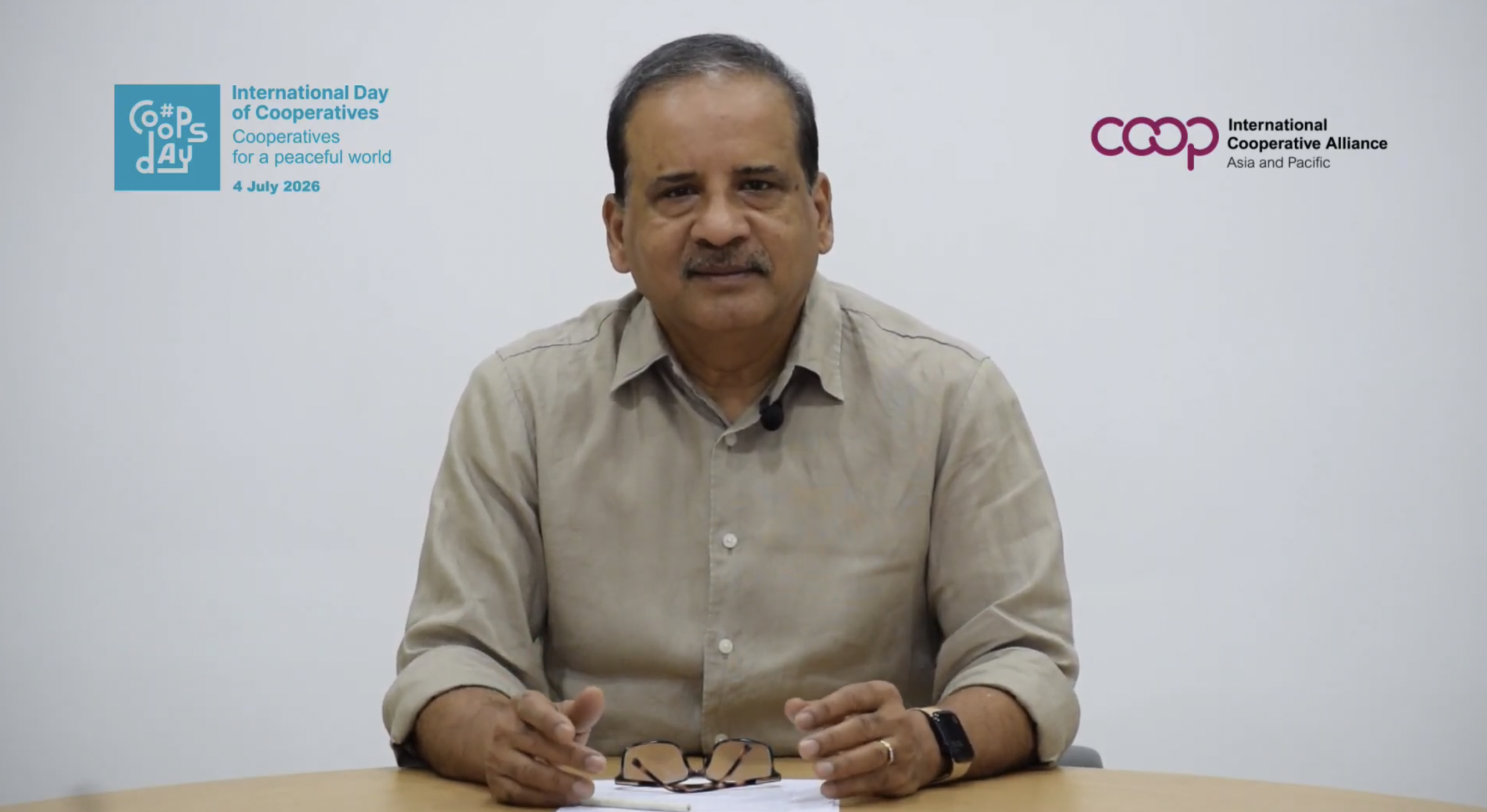
Balu Iyer, ICA AP Regional Director, highlighted how cooperatives serve as essential bridge-builders that promote lasting peace by putting trust, justice, dignity, and inclusive development into practice across diverse communities. He emphasized that peace extends beyond the mere absence of conflict, thriving instead when people collaboratively own institutions, share risks, and lift each other up—as demonstrated by resilient agricultural and financial cooperatives across the Philippines, Japan, India, and beyond.
Rather than merely chasing numbers, successful cooperatives build trust by focusing on member value and addressing critical global challenges like inequality and climate change through cooperation over strict competition. Ultimately, Iyer urged the next generation, women, and tech innovators to sustain this model, noting that while traditional businesses simply create customers, cooperatives create responsible citizens who act as the foundational architects of prosperous and peaceful societies.
Shaping a Peaceful Workplace Rooted in Solidarity
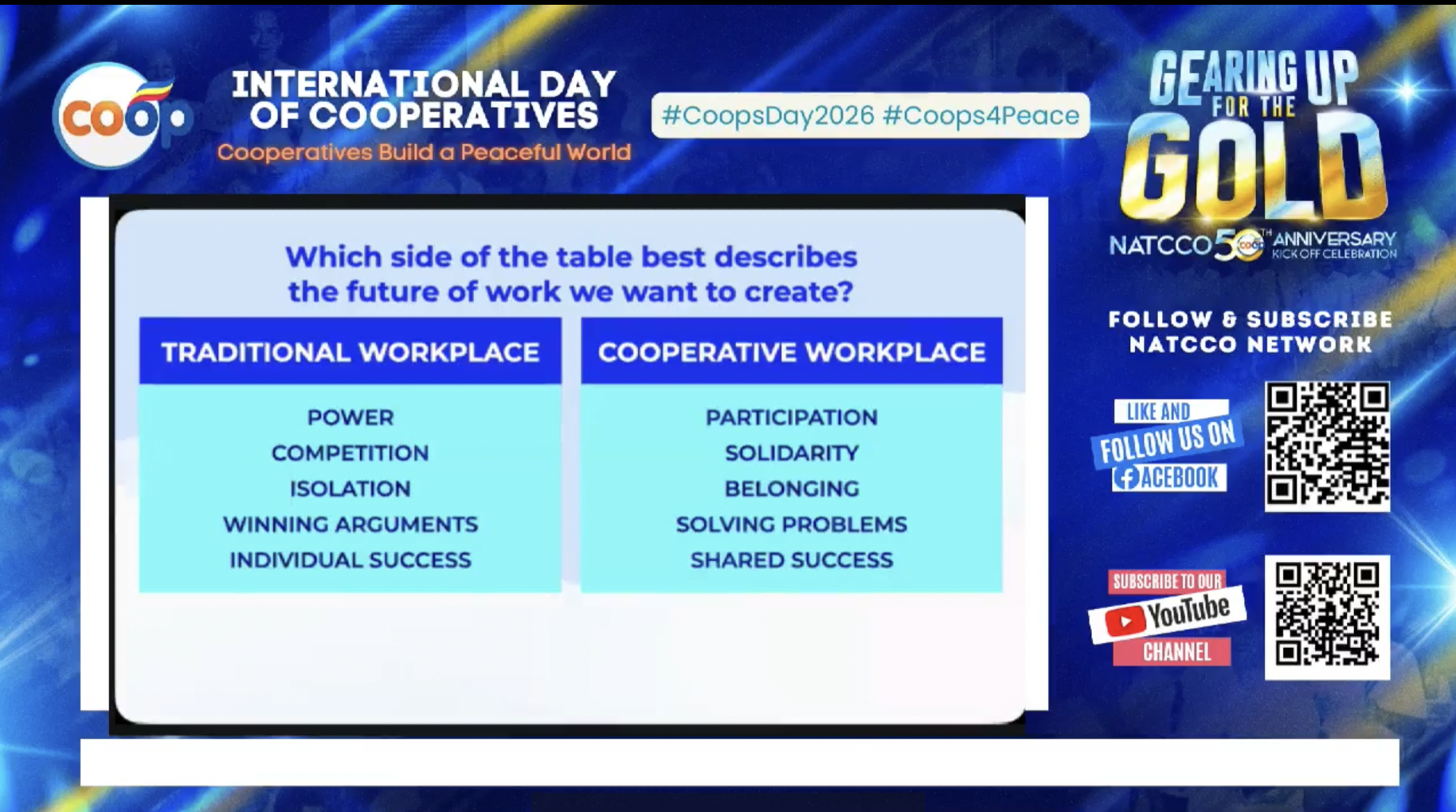
The second input was from Jeronimo “Mimo” Perez, a psycho-spiritual counselor and training consultant who has accompanied NATCCO for its psycho-social initiatives since 2020. Perez’s presentation outlined how cooperative organizations can transition from mere financial enterprises into actual builders of peace. Amidst global issues like war, economic instability, and digital burnout, he proposed a localized focus: “Shaping a Peaceful Workplace Rooted in Solidarity.”
He explained that true peace is built incrementally through three essential peace-building practices:
- Cultivating belonging so all members feel valued.
- Promoting shared success over strict competition.
- Navigating respectful differences without turning conflict into division.
Ultimately, by shifting away from rigid hierarchies and embracing an open, inclusive culture, co-ops can nurture the vital trust capital necessary to achieve unity and model a more harmonious world.
Inclusive Cooperativism as a “Third Way”
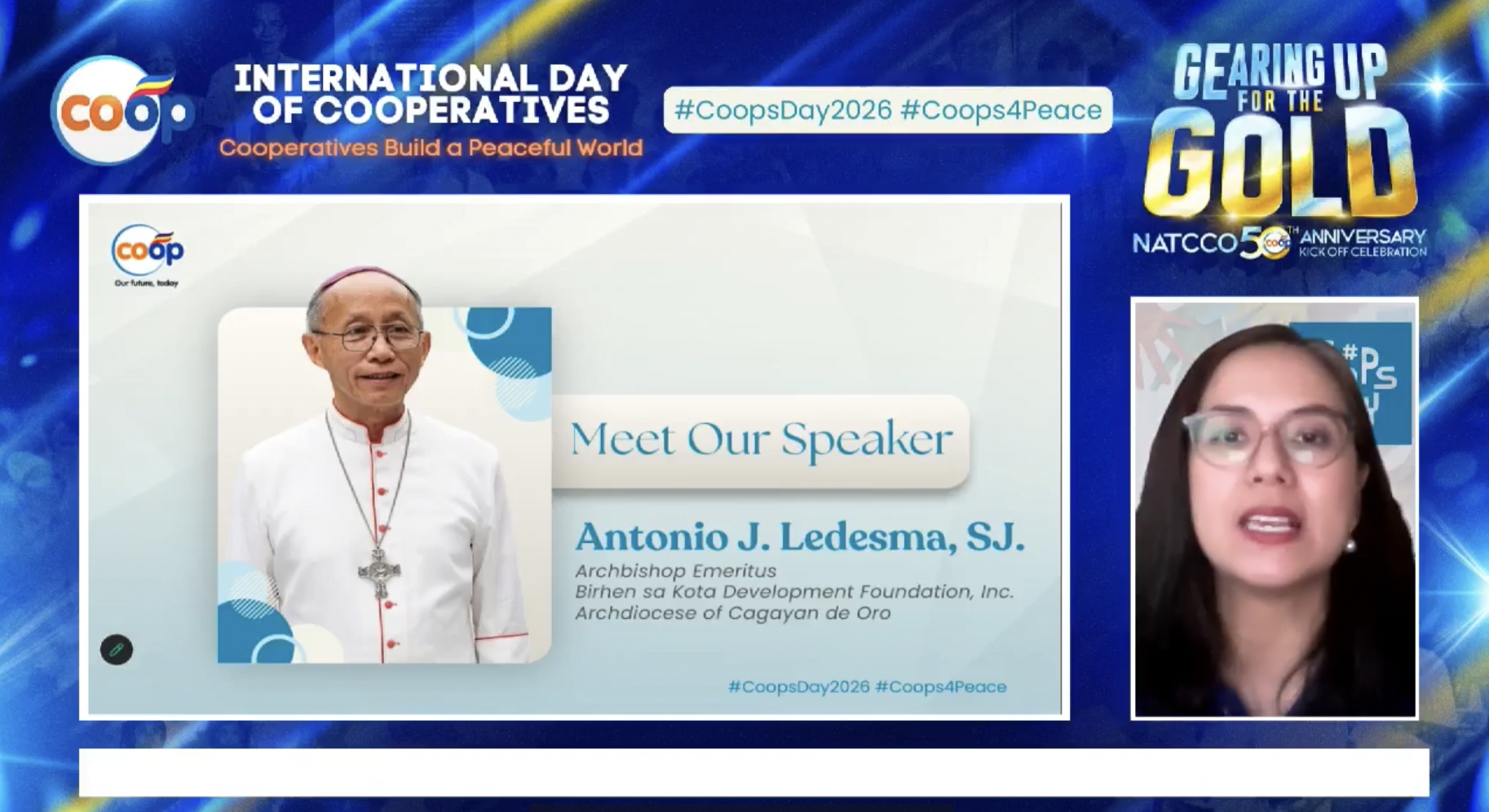
The third speaker, Archbishop-Emeritus Antonio J. Ledesma, SJ, in his presentation, “Inclusive Cooperativism for a Peaceful World,” advocated for cooperative models and inclusive business practices as powerful frameworks for building global peace, reducing inequality, and addressing social misery. Grounded in the seven principles of cooperatives and the foundational pillars of Catholic Social Teaching—such as human dignity, solidarity, and the preferential option for the poor—Ledesma addressed structural exclusion by examining the real-world plight of the Manobo-Pulangiyon Lumad community in Bukidnon, who have faced ongoing challenges in securing their ancestral domain.
To transition marginalized groups from dependency to self-management, he proposed a progressive, hybrid “cor-porative” model. Under this framework, an established “big-brother” cooperative partners with a grassroots worker cooperative, gradually transferring full shares, ownership, and management over an 11-year period. Ultimately, Ledesma envisioned cooperatives as a vital part of civil society and the economy, acting as a “third way” between capitalism and socialism to champion sustainable development and grassroots democracy.
Ultimately, cooperatives prove that true, lasting peace is not simply the absence of conflict, but the active presence of justice, equity, and mutual trust. By prioritizing member value over rigid competition, cultivating inclusive and supportive workplaces, and championing innovative models that empower marginalized communities, co-ops serve as vital structural foundations for harmony. They are much more than financial enterprises; they are democratic, people-centered institutions capable of bridging societal divides and transforming everyday citizens into active peace builders. Through cooperation and shared success, the cooperative movement offers a tangible and resilient blueprint for a more stable, equitable, and harmonious world.