
House Committee on Co-ops approves Coop Code Amendments
QUEZON CITY – The Committee on Cooperatives in the House of Representatives has approved the proposed amendments to the 2008 Cooperative Code, and will now be submitted to the plenary for Reading.
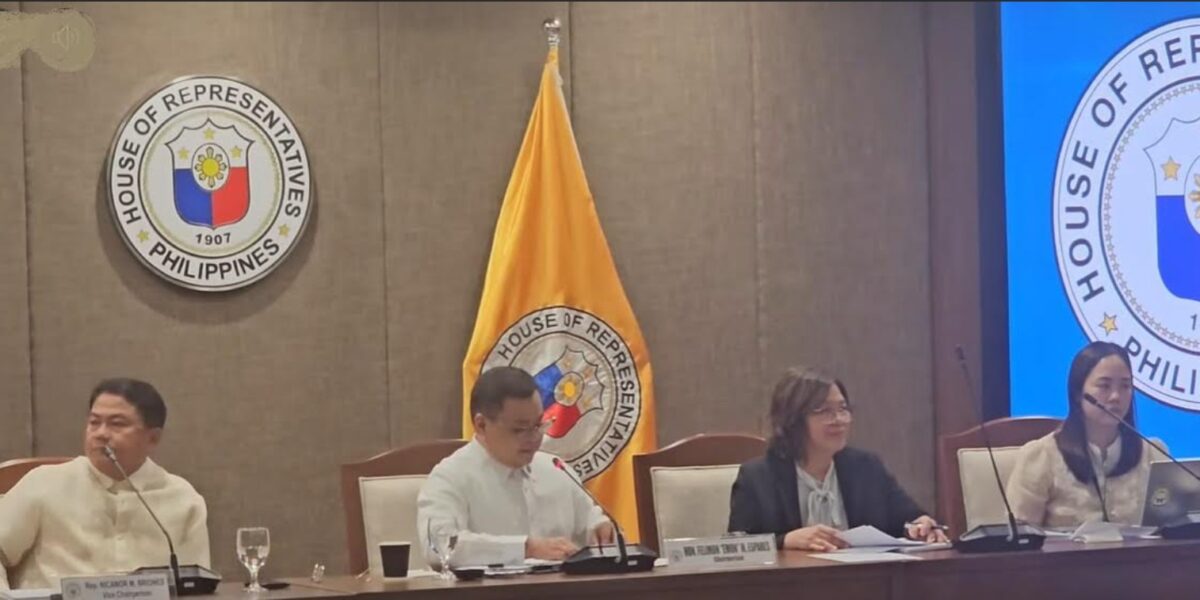
In a hearing by the Committee led by Chairperson Representative Felimon Espares of COOP- NATCCO Partylist on December 3, 2025 the members of the committee unanimously approved House Bill 2416, an Act Providing for the Revised Cooperative Code of the Philipines. Attending the meeting were all the members of the Committee. Invited as observers were representatives of NATCCO and other federations, top officials of the Cooperative Development Authority (CDA), and other key government agencies like the Dept. of Trade & Industry, Dept. of Agriculture, National Electrification Administration, Bureau of Internal Revenue, Dept. of Finance, and other agencies.
Representative Espares presented his House Bill and was accepted by the Committee. No schedule was given when the Bill would be read at the plenary.
There are many key amendments proposed by the Bill.
One is to increase the Reserve Requirement of cooperatives to obtain tax exemptions to Php 100 Million. It was discussed that the Php 10 Million reserve requirement was drawn way back in 1990, and has become irrelevant due to inflation. However, the Department of Finance was adamant in its stand that only agricultural cooperatives are entitled to tax exemption, thus refuting the current provision in the current Cooperative Code that all cooperatives that have reserves less than Php 10 Million are tax exempt.
One of the controversial topics was the Cooperative Education & Training Fund (CETF).
Cooperative unions have proposed in the last six years that 100% of CETF must go only to unions since they are tasked with education of cooperatives. However, cooperative federation leaders cited the International Cooperative Alliance’s (ICA) Guidelines to the Cooperative Principles which states all cooperatives are to engage in education.
Just a week earlier on November 27, the Committee met with cooperative union and federation leaders, and concerned Government agencies. Most union and federation leaders had by then submitted their respective position papers and the Committee secretariat just had to make a few more clarifications.
NATCCO Network had submitted its position paper which pushed for definition of the terms “net surplus”, “education”, “training” to ensure that federations are to engage in “education”, which pertains to teaching the Cooperative Principles, as well as “training” which pertains to co-op business operations.
NATCCO also pushed for an official definition of the “federation of cooperatives”, and that federations can engage in education, and are therefore to receive CETF from primary cooperatives. Also included in the functions of federations are to “carry on . . . cooperative education, training, information, consultancy and delegated supervision relating to its member cooperatives”.
House Bill 2416 states that primary cooperatives shall have the prerogative to choose where or to whom to remit CETF – in accordance with the Declaration at the 2 nd National Forum for Federations and Unions signed by cooperative leaders in Quezon City on May 2025. But at the TWG meeting, the unions initially proposed that unions should receive 20% automatically.
Later, they proposed 10%, to which NATCCO acceded.
Former AGAP Congressman Rico Geron suggested that the Reserve Fund “was just sleeping in the bank and should be used instead for capital expense, acquisitions, and even operations or purchase of inventory or supplies.” NATCCO, representing the interests of credit cooperatives, protested that that Reserve Funds exist to prevent bankruptcy or loss, and should remain liquid in a bank. The Bangko Sentral ng Pilipinas (BSP) representative as well as the Office of Transport Cooperatives (OTC) concurred.
It was later agreed that said proposal will only apply to agricultural cooperatives. The BSP representative suggested that the RF should be deposited only in Government-owned banks such as Land Bank. The CDA representative said some funds should be deposited in cooperative banks as well.
NATCCO also suggested that the secretariat update the provisions in the revised Cooperative Code on the Cooperative Principles, which is currently undergoing revisions by the ICA. On the Classification of Cooperatives, “Tertiary cooperatives” will be stricken out from the Code. Fr. Anton Pascual, Interim Chairperson of the National Union of Cooperatives said there should be only one Apex, and CDA added it should be registered with the CDA and not other regulators. This was obviously an arrow aimed at the Philippine Chamber of Cooperatives (PCC). PCC Executive Director, Edwin Bustillos, was absent at the hearing, attending an ICA event abroad.
The Bill also says any primary co-op in a “line of business” can join any federation in another “line of business” as long as there is “common needs and aspirations”. A CDA official described the sector as “chop suey” (mixed up). NATCCO’s representative, Diosdado Luna, countered that NATCCO had a term for “chop suey”: “INTEGRATION” where all and different types of cooperatives work together to help one another.
Luna added: “Integration works, as proven by the other federations in other countries.” Fr. Anton Pascual concurred.